Rwanda marks World Malaria Day with a call for collective action towards “Zero Malaria”
Rwanda joined the global community in celebrating World Malaria Day under the global theme “Malaria Ends with Us: Reinvest, Reimagine, Reignite and the national campaign “Zero Malaria Starts with Me.” National celebrations took place in Ndera Sector, Gasabo District, bringing together community members, local leaders, policymakers, and development partners to reflect on progress and mobilize renewed action toward malaria elimination by raising awareness about malaria prevention and control.

As part of this year’s celebrations, Rwanda launched key initiatives to accelerate progress towards Malaria elimination. These include:
- National Community-Based Malaria Surveillance: A new rapid-response approach designed to investigate and respond to malaria cases within seven days, identifying and addressing risk factors at the community level.
- First-Line Therapies Diversification: Introducing new treatment options to improve care and combat drug resistance.
Rwanda has also intensified targeted interventions across high-risk districts, including:
- Indoor Residual Spraying to reduce mosquito populations;
- Distribution of Long-Lasting Insecticidal Nets (LLINs) to households in malaria hotspots;
- Community-Based Integrated Vector Management
- Delivery of Malaria medicines using drones
During the National Community-Based Malaria Surveillance, the recently launched initiative in Kigali where all household members in 15 sectors were screened and treated beard fruits.
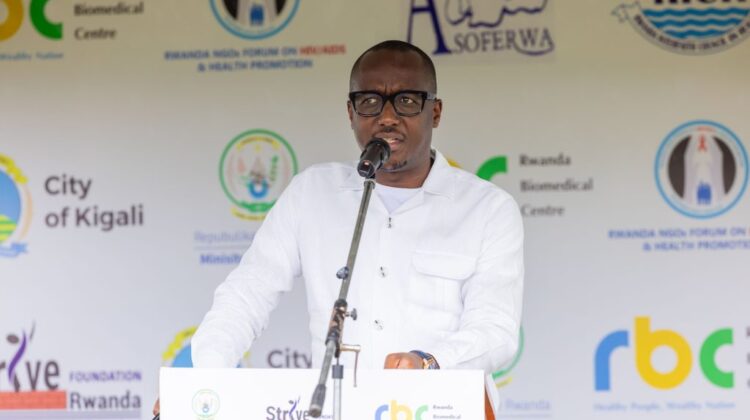
“Thanks to that program, we identified 769 index cases. We then tested 2,326 family members and found 626 attached cases that we would have otherwise missed,” noted Prof. Mambo Claude Muvunyi; RBC Director General.
Over the last decade, Rwanda registered a significant reduction in Malaria cases. Cases dropped from 4.8 million in 2016/2017 to 620,000 in 2023/2024, reflecting the country’s strong commitment to effective prevention and treatment strategies.
However, malaria remains a public health challenge. In 2024 alone, 802,428 uncomplicated malaria cases were recorded. As of March 2025, the national malaria incidence stands at 6 cases per 1,000 people—a testament to both the progress made and the continued urgency for action.
Rwanda remains committed to strengthening community awareness and engagement, ensuring access to effective prevention tools and treatment, as well as working collectively toward a Malaria-free future.
“We urge every citizen to take an active role in the fight against Malaria. Eliminating breeding grounds around homes and adhering to proper medication use are essential. We also call upon all stakeholders and institutions to join forces in prevention and early detection”, he added.